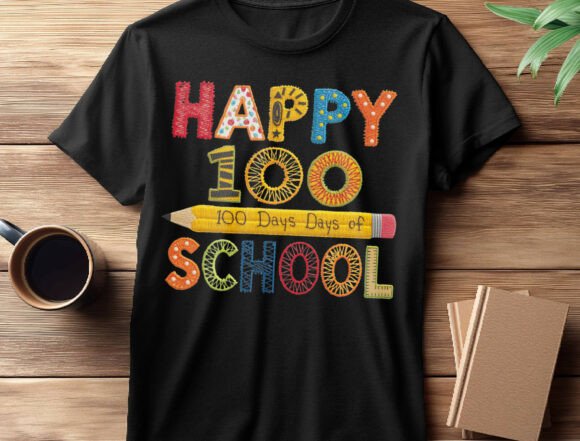
Happy 100 Days of School Yarn Embroidery
A Craft Fair Designer’s First Look: Warm, Whimsical, and Instantly Recognizable
As an embroidery designer who’s prepped over 200 craft fair booths—from snowy holiday markets to sun-drenched summer fairs—I opened Happy 100 Days of School Yarn Embroidery expecting charm, but what landed was something more strategic: a cozy, hand-crafted mood with clear commercial instinct. The title alone tells the story—“yarn embroidery” signals texture and approachability; “100 Days of School” anchors it in a high-demand seasonal niche. It doesn’t shout—it smiles. That makes it ideal for handmade product lines where warmth and authenticity drive purchase decisions.
Where This Design Shines on Real Craft Fair Products
Tote bags are the first win. With its balanced composition and soft outline, Happy 100 Days of School Yarn Embroidery reads clearly at 4–5 inches wide—perfect for center-front placement on natural canvas or linen-look totes. Customers scanning a crowded booth lock onto its gentle rhythm before they even read the text.
Aprons and tea towel embroidery benefit from its layered-yarn aesthetic—it mimics hand-stitched texture without demanding hand-stitching labor. On a white cotton apron, it feels like a teacher’s personal signature; on a striped tea towel, it adds narrative without clutter. Its scale works equally well as a focal chest piece or a subtle corner accent.
Embroidered patches are where this design becomes truly versatile. As a machine embroidery design, it translates cleanly into a sew-on or iron-on patch—ideal for backpacks, denim jackets, or student gift sets. Because the yarn-style lines are slightly rounded—not sharp or technical—it avoids looking stiff or digital when stitched.
Pillow covers and fabric pouches get a quiet upgrade. Unlike dense, busy motifs, Happy 100 Days of School Yarn Embroidery breathes. It leaves room for fabric texture to show through, reinforcing the handmade product feel. On oatmeal linen or unbleached muslin, it reads as intentional, not decorative filler.
What Holds It Back (And How to Work Around It)
This isn’t a one-size-fits-all embroidery file. Its “yarn” styling implies soft edges and implied thickness—so tiny lettering or tight curves can blur if stitched too small. I recommend never scaling below 3.5 inches wide for finished products. On curved surfaces like caps or small pouches, test stitch density first: dense fill areas may pucker on stretchy or thick fabrics.
Dark fabric requires careful thread color planning. Since the design leans into cozy contrast (think cream yarn on navy or charcoal), avoid low-contrast combos like light gray thread on black twill. Always test on scrap fabric—especially with textured towels or heavy duck cloth—where stitch definition can soften.
For commercial embroidery, confirm licensing terms before producing bulk runs. While the description mentions “sublimation file” and “PNG,” verify whether the digital embroidery file includes multiple formats (PES, DST, JEF) and whether commercial use is explicitly granted. Etsy sellers and small shop owners should never assume.
Photography, Mockups, and Online Appeal
This design photographs beautifully—even on phone cameras. Its soft outlines reduce glare, and its limited color palette (implied by “yarn” styling) ensures consistency across lighting conditions. For printable mockups and Etsy listings, pair it with warm, natural backdrops: wooden tables, chalkboard signs, or stacked school supplies. Avoid overly busy backgrounds—the design’s strength is its gentle clarity.
It also scales well for digital marketing: cropped versions work as Instagram story highlights (“100 Days Countdown!”), and simplified line-art derivatives can become printable classroom decor or teacher appreciation cards—expanding your design assets beyond physical products.
Booth Impact and Buyer Engagement
In a sea of glitter, neon, and maximalist slogans, Happy 100 Days of School Yarn Embroidery stands out by being quietly confident. Parents pause longer at displays featuring it—not because it’s loud, but because it feels *known*. It taps into nostalgia, pride, and the quiet joy of milestone learning. At craft fairs, that emotional resonance converts faster than novelty alone.
Pair it with complementary handmade products: a matching embroidered pencil case, a yarn-wrapped bookmark, or a mini tote with the same motif. That cohesion strengthens brand consistency and encourages bundle sales—especially among teachers shopping for classroom gifts or parent groups organizing celebrations.
Practical Designer Notes Before You Stitch
- Test the embroidery file on your target fabric *before* cutting production pieces—especially for tea towel embroidery or apron embroidery where absorbency affects stitch tension.
- Use medium-weight cutaway stabilizer for structured items (totes, caps) and tear-away for softer goods (pillow covers, pouches).
- Check spacing between letters and yarn loops—if threads nest too tightly, adjust underlay or reduce density by 5–10%.
- Confirm hoop size compatibility: many yarn-style designs require at least a 5" x 7" hoop. Don’t assume it fits smaller machines without verifying.
- Create at least one real-world mockup—not just a digital preview. Hold it in natural light. Drape it. See how it moves with the fabric.
- Compare thread colors across fabric bases: a single ecru thread may read warm on ivory linen but cool on off-white cotton. Keep swatches on hand.
Final Thought: A Smart, Seasonal Anchor for Your Handmade Line
Happy 100 Days of School Yarn Embroidery isn’t just another T-Shirt Designs graphic—it’s a mood, a moment, and a market-ready opportunity. It bridges the gap between classroom celebration and craft fair authenticity. For embroidery business owners, Etsy sellers, and boutique makers, it’s a rare find: a design that looks handmade *even when machine-stitched*, sells across categories, and invites repeat customers year after year. Just remember: its softness is its strength—don’t force it into spaces it wasn’t designed for. Let it breathe, stitch it with intention, and watch it draw people in—not with volume, but with warmth.