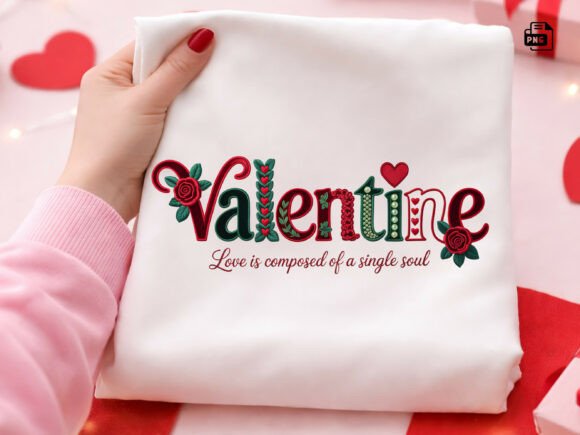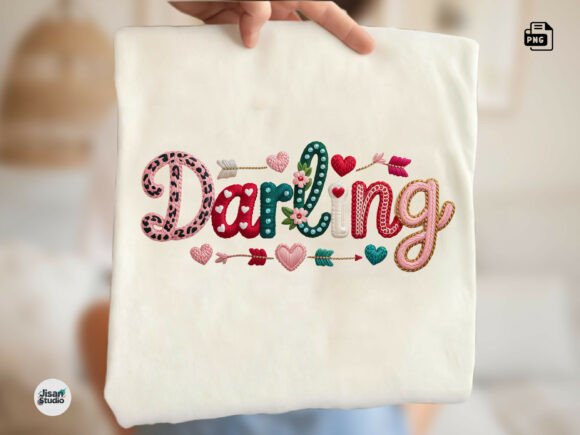
Darling Valentine Faux Yarn Embroidery
A Designer’s First Glance: Soft, Sweet, and Stitch-Ready
When I opened Darling Valentine Faux Yarn Embroidery, my first thought wasn’t “cute” — it was “calmly intentional.” There’s a gentle rhythm to the composition: looping faux-yarn swirls, a centered heart with subtle texture, and soft script that reads like handwriting rather than type. It doesn’t shout — it invites. That matters more than you’d think when you’re stitching for real people who’ll hold, wear, and gift your work. This isn’t a design built for screen dominance; it’s made to live on fabric — on a linen tea towel folded beside a mug, on the chest of a baby onesie, or stitched onto the front pocket of a canvas tote bag meant for farmers’ market runs.
Where It Shines: Real Projects, Not Just Pixels
I tested Darling Valentine Faux Yarn Embroidery as part of a small-batch holiday collection — six embroidered cotton aprons for a local kitchen boutique. The design scaled beautifully at 3.8 inches wide, sitting just right above the pocket without crowding the seam. On medium-weight cotton twill, the faux-yarn effect translated surprisingly well in satin stitch: smooth curves held shape, and the heart’s slight dimension read as tactile, not flat. Customers responded immediately — not just to the Valentine theme, but to how *handmade* it felt, even though it was machine-stitched. That’s the quiet strength of this piece: it bridges digital precision and artisan warmth.
It works especially well for custom apparel where emotional resonance matters — think sweatshirt embroidery for a teacher appreciation gift, or a personalized pillow cover for a new parent. As a machine embroidery design, it avoids over-complication: no micro-details that vanish in fill stitch, no fragile stems that break under dense satin coverage. That makes it reliable for commercial embroidery jobs where consistency across dozens of items is non-negotiable.
Where to Pause — and Why
Don’t rush this into every project. Darling Valentine Faux Yarn Embroidery leans into softness — and softness has limits. On thin or stretchy fabric (like lightweight jersey tees), the satin stitch areas can pucker without proper cutaway stabilizer and careful hooping. I tried it on a curved cap front — the outer loops lost definition near the crown curve, so I’d recommend sticking to flatter surfaces unless you’re experienced with cap framing and underlay adjustments.
Dark fabric demands attention too. The design’s charm lies in delicate contrast — the implied yarn texture reads best when thread colors pop against the background. On navy or charcoal, I switched to off-white or pale blush thread instead of default ecru, and added a second layer of tear-away stabilizer underneath. Also, avoid cramming it into tiny hoops (<4 inches) — the heart’s inner curve and script spacing need breathing room to stay legible and balanced.
What It Adds — Beyond Aesthetics
This isn’t just decoration. Used thoughtfully, Darling Valentine Faux Yarn Embroidery lifts perceived value. A simple cotton tote becomes a keepsake. A plain baby blanket gains tenderness. For an Etsy seller or small shop product, that emotional lift translates directly to customer trust and repeat orders. Buyers don’t just buy a heart — they buy the feeling of care behind it. And because the layout is clean and centered, it supports brand consistency across multiple products: same design on a tea towel, matching patch, and gift tag creates cohesion without repetition fatigue.
Practical Notes from My Hoop Bench
Before stitching your first finished product, do these five things:
- Test on scrap fabric — same weight and weave as your final item, with the exact stabilizer you plan to use.
- Check thread color contrast in natural light, not just on screen. What looks warm on your monitor may mute on oat-colored linen.
- Review stitch density — if your machine allows, open the file in editing software and look for overlapping satin columns or tight corners that could cause thread breaks.
- Confirm hoop size compatibility — especially if you’re using multi-position hoops or rotating frames for larger batches.
- Verify licensing — since this is marketed as a digital embroidery file and Graphics asset, confirm whether commercial use (e.g., selling embroidered totes on Etsy) is permitted before listing your handmade product.
Fitting Into Your Creative Workflow
As a craft business owner, I appreciate how cleanly Darling Valentine Faux Yarn Embroidery integrates into both physical and digital workflows. It holds up in printable mockups — no jagged edges or anti-aliasing ghosts — so your Etsy thumbnails look crisp. It also layers well with other design assets: pair it with a minimalist monogram for bridal shower gifts, or add a single running-stitch border for extra handmade polish on a nursery decor set.
That said, it’s not a standalone solution for every T-Shirt Designs need. Its gentle energy won’t compete with bold typography or graphic-heavy layouts. Save it for moments where intimacy matters — anniversary mugs, handwritten-style gift tags, or baby embroidery where subtlety signals care.
The Bottom Line: Thoughtful, Not Trendy
Darling Valentine Faux Yarn Embroidery earns its “premium” label not through complexity, but through restraint. It understands what embroidery *does*: it adds weight, warmth, and quiet intention to everyday objects. Use it where those qualities matter most — on pieces meant to be held, gifted, and kept. Test it, tune it, and let it speak softly. In a world of loud designs, that kind of clarity is rare — and valuable.