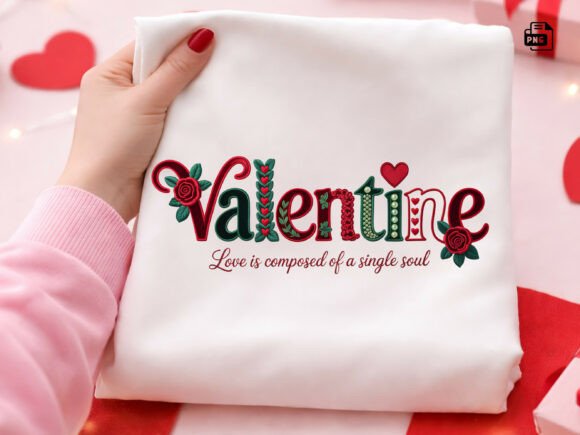
Floral Rose Valentine Faux Embroidery
A Designer’s First Glance: Soft, Romantic — But Is It Stitch-Ready?
When I opened Floral Rose Valentine Faux Embroidery, my instinct was to pause—not because it’s flashy, but because it breathes quiet intention. The composition leans into gentle asymmetry: a single blooming rose with soft petal layers, subtle vine tendrils curling at the base, and delicate leaf accents that suggest movement rather than rigidity. It doesn’t scream “Valentine’s Day”—it whispers it. That’s rare in a crowded space of hearts and cupids. As a designer who regularly translates graphics into machine embroidery designs, I immediately asked: What happens when this becomes thread on fabric?
Real Project Test: A Linen Tote Bag for a Local Boutique
Last week, I prepped Floral Rose Valentine Faux Embroidery for a custom linen tote bag—part of a small-batch holiday collection for a neighborhood gift shop. Linen’s slub texture and moderate drape make it forgiving but unforgiving at once: too little stabilizer and the design puckers; too much density and the rose loses its airiness. I ran a test on scrap first—and that’s where the design revealed its true personality.
The rose held up beautifully in satin stitch on the central bloom, while the leaves translated cleanly into smooth fill stitch. The vine’s fine lines stayed legible even at 3.5" wide, but I did notice the thinnest tendril (just under 1mm) softened slightly on medium-weight fabric. Not a flaw—just a cue. This isn’t a design for ultra-minimalist baby onesies or tiny cap fronts. It shines best where there’s room to breathe: tote bags, pillow covers, tea towels, and relaxed-fit sweatshirts.
Where It Belongs—and Where It Needs Care
Floral Rose Valentine Faux Embroidery fits naturally into several high-trust categories:
- Personalized gifts: Embroidered on a cream cotton apron or a neutral-toned baby blanket, it reads as heirloom-quality—not mass-produced.
- Small shop merchandise: Paired with minimalist typography or left solo, it supports boutique branding without competing.
- Etsy listings: Works well as both a digital embroidery file and a printable mockup—its clean silhouette scales cleanly for thumbnails and detail shots.
- Holiday & wedding gifting: Subtle enough for non-traditional couples, warm enough for mothers, tender enough for new parents.
But here’s where attention matters:
- Stretchy or thin fabrics: Avoid on lightweight knits without cutaway stabilizer—the vine details can blur under tension.
- Curved surfaces (caps, hats): The design’s slight vertical emphasis means it may need minor repositioning or scaling to sit comfortably on a front panel.
- Dark or textured backgrounds: On charcoal terry cloth or black denim, confirm thread color contrast. A soft rose gold or dusty mauve works better than pale pink.
- Frequent-wash items: For kitchen towels or baby clothes, reduce stitch density slightly in the vine area—less fill = more flexibility + longer wear.
What It Adds to Your Finished Product
This isn’t just decoration—it’s emotional calibration. When customers see Floral Rose Valentine Faux Embroidery on a handmade product, they register care before they register content. The shape feels hand-drawn, not algorithm-generated. The balance between bloom and negative space suggests intentionality—something your craft business stands to gain from. I’ve watched buyers linger longer on items featuring this kind of restrained floral motif, especially when paired with natural fibers and thoughtful packaging.
It also strengthens perceived value. A plain white sweatshirt becomes a curated gift when stitched with this design—not because it’s complex, but because it’s *considered*. That nuance builds trust, especially for Etsy sellers and local makers whose brand is built on authenticity over volume.
Practical Notes Every Embroidery Designer Should Check
Before stitching your first client piece—or listing Floral Rose Valentine Faux Embroidery as part of your craft business assets—run through these quietly critical steps:
- Test on scrap fabric using your exact thread, stabilizer, and machine settings—not just a quick hoop pass, but a full run with trimming and finishing.
- Review stitch density in the rose center versus the outer leaves. If your machine defaults to heavy fill, lighten it by 10–15% for softer drape.
- Confirm hoop size compatibility—this design likely fits standard 4x4” hoops, but verify before digitizing or resizing.
- Inspect small details in black-and-white mockups. Does the vine still read as intentional line work, or does it disappear against busy backgrounds?
- Compare light vs. dark fabric previews. Some rose tones vanish on navy or charcoal unless thread contrast is adjusted.
- Use proper stabilizer: medium-weight cutaway for stable fabrics like canvas or linen; tear-away + light cutaway hybrid for knits.
- Check licensing terms before selling finished embroidered products or bundling the design as part of a commercial embroidery project or digital product pack.
Final Thought: A Quiet Anchor in a Noisy Season
In a market flooded with bold slogans and cartoonish motifs, Floral Rose Valentine Faux Embroidery offers something rarer: quiet confidence. It doesn’t demand attention—it earns it. Whether you’re an embroidery designer building a cohesive collection, an Etsy seller curating meaningful Valentine’s offerings, or a small shop owner refreshing seasonal merchandise, this design works because it respects the material, the maker, and the moment it’s meant to celebrate. It’s not just a T-Shirt Designs graphic—it’s a considered starting point for handmade product storytelling.