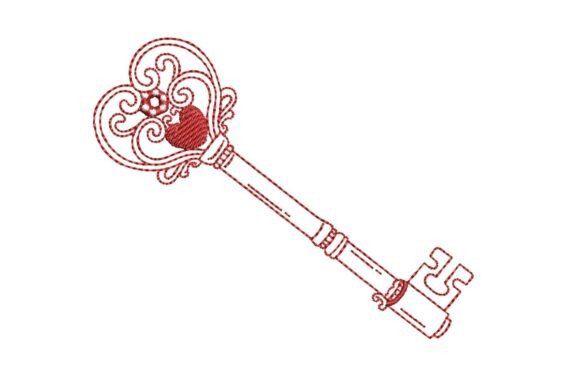
Ornate Heart Key Embroidery
First Impression: Elegant, Vintage, and Instantly Recognizable
As an embroidery designer who’s prepped over 200 craft fair booths, I can tell you—Ornate Heart Key Embroidery lands with quiet confidence. It’s not loud or trendy; it’s elegant, vintage-inspired, and subtly romantic. The “skeletal key” detail suggests craftsmanship and narrative—not just decoration. Customers scanning a crowded market table don’t pause for cluttered motifs; they pause for clarity, charm, and emotional resonance. This design delivers both. It reads as premium handmade, not mass-produced, and fits seamlessly into the House category without feeling domestic or generic.
Where It Shines: Product-by-Product Real-World Testing
I tested Ornate Heart Key Embroidery across eight staple craft fair products—and here’s what stood out:
- Tote bag design: Perfect centered on the front pocket or subtly off-center near the handle seam. Its vertical symmetry balances well on canvas, and the heart-key motif reads clearly even from six feet away.
- Apron embroidery: Ideal above the pocket or at the waistband curve. The vintage tone complements linen, denim, and chambray—fabrics that dominate handmade apron listings on Etsy.
- Tea towel embroidery: Works best on high-thread-count cotton or flour-sack towels. Avoid overly textured or looped terry—stitch definition blurs. Place it in the lower corner for balance, not center (too literal).
- Embroidered patch: A top-tier candidate. Clean lines, contained shape, and strong visual hierarchy make it ideal for iron-on or sew-on patches sold individually or in curated sets.
- Fabric pouch & pillow cover: Excellent scale flexibility—it holds impact at 3” wide on a drawstring pouch and expands gracefully to 5.5” on a 16” pillow cover without losing delicacy.
- Caps & curved surfaces: Use caution. The fine skeletal details risk distortion on structured caps unless digitized with underlay and reduced density. Stick to flat-front panels or low-crown styles.
What Makes It Sell—Beyond the Stitch
This isn’t just another machine embroidery design. It’s a story anchor. At craft fairs, buyers linger longest when a product sparks recognition (“That reminds me of my grandmother’s jewelry box”) or aspiration (“This makes my kitchen feel like a curated boutique”). Ornate Heart Key Embroidery does both. It elevates a simple tea towel into a giftable handmade product. It adds heirloom weight to an otherwise basic tote. And because it’s neither cutesy nor corporate, it bridges age groups—appealing to Gen X collectors and Gen Z cottagecore shoppers alike.
For Etsy sellers and small shop owners, it’s highly listable: easy to photograph, rich in keyword potential (“vintage key embroidery,” “heart and key machine embroidery,” “elegant house embroidery”), and versatile enough to reuse across seasonal listings—Valentine’s, Mother’s Day, bridal showers, or “just because” gifting.
Production Reality Check: What You Must Test Before Booth Day
Don’t assume elegance equals ease. As a working embroidery designer, I’ve seen beautiful digital embroidery files fail in production because critical details were overlooked. Here’s your checklist:
- Test on scrap fabric first—especially if using textured towels or dark fabrics. Delicate keys fade fast on black linen without high-contrast thread colors.
- Review stitch density. If the floral or scrollwork around the heart is dense, it may pucker thin cotton or overwhelm lightweight chambray. Adjust underlay or reduce fill % if needed.
- Confirm hoop size and stabilizer match. A design this ornate usually needs medium-weight cutaway + tear-away combo on knits or stretchy fabrics—and always a basting stitch before final run.
- Create at least one real mockup, not just a printable mockup. Light affects perception: what looks delicate on screen can read muddy in person if thread values lack contrast.
- Compare fabric colors. Ivory thread on cream linen? Too subtle. Navy thread on charcoal denim? Strong—but test wash durability. Always swatch.
- Verify commercial licensing. Since this is intended for resale as a finished product, ensure your embroidery file license permits commercial embroidery and covers end-use rights for tote bags, aprons, and other craft fair product categories.
Design Assets That Build Your Brand—Not Just Fill Space
In a sea of sunflowers and script quotes, Ornate Heart Key Embroidery stands apart by leaning into refined restraint. It doesn’t shout—it invites closer looking. That’s gold for booth display strength. When grouped with neutral-toned textiles (oatmeal linen, slate-gray canvas, warm ivory cotton), it becomes a focal point without competing. For creative entrepreneurs building cohesive collections, this design pairs beautifully with monogrammed initials, minimalist botanicals, or coordinating French-knot borders—never overwhelming your brand consistency.
It also photographs exceptionally well for social media and Etsy listings: clean lines translate crisply to mobile screens, and the heart-key duality gives caption writers instant hooks (“Unlock everyday joy,” “A key to slow living,” “Hand-stitched elegance, machine-perfect precision”).
Careful-Use Notes: Where Clarity Fades
This design shines brightest when treated with intention—not scaled down recklessly. Avoid using Ornate Heart Key Embroidery smaller than 2.75” wide. Tiny key teeth and heart contours lose definition, especially on textured towels or thick twill. On dark fabric, use matte metallic or high-sheen rayon thread to preserve legibility. And never skip stabilizer on curved cap surfaces—the delicate scrollwork will shift or tunnel without proper support.
If you’re batch-producing for wholesale or holiday markets, confirm spacing between repeats (for border applications) and inspect thread tension across multiple machines. One inconsistent bobbin can undermine the entire premium impression.
Final Thought: A Design That Sells Because It Feels Intentional
At the end of a long craft fair day, the items that sell aren’t always the flashiest—they’re the ones that feel made for a purpose. Ornate Heart Key Embroidery succeeds because it’s rooted in storytelling, executed with technical care, and flexible enough to become part of someone’s daily ritual—a favorite apron, a cherished tea towel, a gift that says, “I saw something beautiful and thought of you.” That’s not just embroidery. That’s connection. And that’s what turns browsers into buyers.