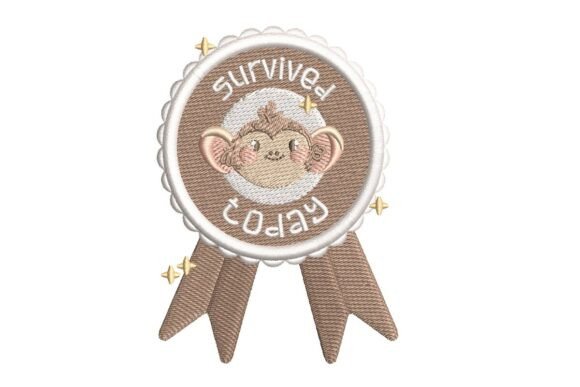
Survived Today Monkey Award Embroidery
A Seasonal Designer’s First Impression
As an embroidery designer who’s curated holiday collections for over a decade, my first glance at the Survived Today Monkey Award Embroidery design lands with quiet resonance—not flash, not glitter, but warmth. It reads as cozy, playful, and gently nostalgic—like a hug stitched in thread. The monkey motif is approachable and expressive, not cartoonish or overly detailed, which gives it strong seasonal flexibility. The phrase “Survived Today” carries emotional weight without leaning into cynicism; instead, it feels uplifting, grounding, and deeply human—perfect for the emotional landscape of holiday shopping, where customers seek meaning alongside merriment.
Why This Design Fits Holiday & Seasonal Product Strategy
The Survived Today Monkey Award Embroidery isn’t just charming—it’s commercially versatile across high-demand holiday categories. On sweatshirt embroidery, it softens the oversized silhouette with personality and heart. As a tote bag design, it transforms everyday utility into a lighthearted statement—ideal for gift bags, teacher appreciation sets, or family reunion kits. For kitchen towel embroidery, it adds whimsy to functional home decor without overwhelming the fabric texture. As a pillow cover or embroidered patch, it invites tactile engagement—exactly what shoppers look for in handmade gift selections during November and December.
Etsy sellers will appreciate how naturally this machine embroidery design supports storytelling in listings: “A gentle reminder that showing up matters,” “For the parent, nurse, student, or caregiver who made it through another day.” That narrative clarity boosts conversion, especially when paired with printable mockups showing the design on aprons, table linens, or baby onesies. And for craft fairs? It shines in limited edition apparel—think matching family sweatshirts or coordinating ornament + pillow cover bundles. Its emotional authenticity builds customer trust faster than generic holiday motifs.
Where to Use It Thoughtfully—And Where to Pause
Like any well-intentioned seasonal embroidery, the Survived Today Monkey Award Embroidery performs best when matched intentionally to material and application. Avoid using it on ultra-thin fabrics or curved caps unless you’ve confirmed hoop size compatibility and tested stabilizer support—those subtle facial details and lettering need stability to hold shape. On thick towels or textured weaves, stitch density becomes critical: too dense, and the design flattens; too sparse, and the monkey’s expression loses definition. Always test thread colors on both light and dark fabric—especially for small shop product lines where consistency matters across variations.
Be cautious with metallic thread unless your machine handles it reliably—this design’s charm lies in its softness, not shine. Similarly, avoid stretching the design onto highly elastic garments without digitizing adjustments; the original proportions are calibrated for stable substrates like cotton twill, linen blends, or midweight knits. And while it works beautifully on baby items (onesies, burp cloths), double-check that all stitching remains fully enclosed and secure after repeated washing—safety and durability are non-negotiable for personalized gift buyers.
Design Notes Every Embroidery Professional Should Apply
- Confirm commercial licensing before selling finished products—this is essential for Etsy sellers and small business owners using the digital embroidery file in physical goods.
- Review small details post-stitch: the monkey’s eyes and mouth carry emotional tone—verify clarity at actual production scale, not just on-screen.
- Plan cohesive color palettes around the design: earthy ochres, soft sage, warm charcoal, and cream enhance its cozy, inspirational vibe better than neon or high-contrast combos.
- Create realistic mockups—not just white backgrounds. Show it stitched on a worn denim jacket, a linen pillow cover beside holiday greenery, or a canvas tote slung over a wooden chair. Context sells.
- Use tear-away + cut-away stabilizer hybrids for mixed-fabric applications—especially when moving between kitchen towel embroidery and sweatshirt embroidery in the same batch.
How It Elevates Emotional Connection During Peak Shopping
Holiday shoppers aren’t just buying products—they’re buying reassurance, identity, and shared feeling. The Survived Today Monkey Award Embroidery taps directly into that. It doesn’t shout “Merry Christmas!”—it whispers, “I see you.” That subtlety makes it memorable in crowded feeds and physical displays alike. On social media previews, it stands out because it’s relatable, not repetitive. In gift-ready packaging—say, a monogrammed pillow cover tucked inside a reusable cotton drawstring bag—it signals care, intention, and emotional intelligence.
From a branding standpoint, it reinforces authenticity. When used consistently across a seasonal embroidery collection—paired with complementary phrases like “Made It Through” or “Today Was Enough”—it builds visual recognition without rigid repetition. Customers begin to associate your shop with empathy-driven design, not just aesthetics. That consistency deepens engagement, encourages repeat visits, and supports higher perceived value—even on modestly priced items like embroidered patches or tea towels.
Final Thoughts for Sellers Building Meaningful Collections
The Survived Today Monkey Award Embroidery is more than a cute holiday embroidery—it’s a thoughtful anchor for an inspirational product line. It balances playfulness with sincerity, simplicity with emotional depth, and versatility with distinctiveness. For small shop owners and handmade gift makers, it offers a rare combination: low barrier to entry (no complex layering or specialty threads required) and high emotional ROI.
Before adding it to your next seasonal drop, take five minutes to stitch a sample on your most common holiday substrate—then hold it up beside your best-selling item. Does it belong? Does it elevate? Does it feel true to the people you serve? If yes, you’ve found a keeper. Because in a season full of noise, the designs that survive—and thrive—are the ones that help others feel like they’ve survived, too.