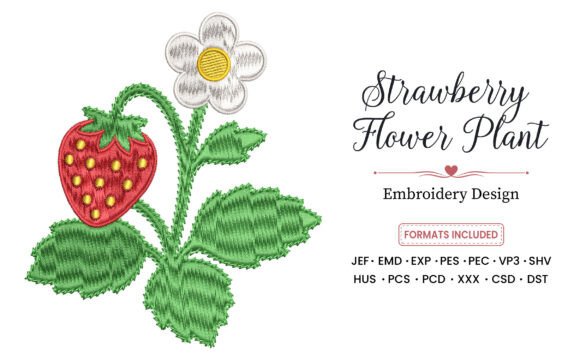
Strawberry Flower Embroidery Design
A Sweet Spot for Handmade Charm — Tested on a Linen Tea Towel
I stitched the Strawberry Flower Embroidery Design onto a natural linen tea towel last week — not for a client, but for my own kitchen shelf. Why? Because before I recommend it to an Etsy seller or use it on a custom sweatshirt order, I need to know how it holds up in real light, real fabric, and real hands. The first impression? It’s cheerful without being cloying — that bright strawberry sits cleanly against soft floral stems and leaves, like something plucked from a sunlit garden rather than a clip-art library. There’s no clutter, no overwrought detail, and no forced “cuteness.” Just balance: round fruit, gentle curves, open negative space. That matters — especially when you’re stitching for baby embroidery or boutique branding where subtlety builds trust.
Where It Shines (and Where It Needs Care)
This machine embroidery design works beautifully on medium-weight woven fabrics — think cotton aprons, canvas tote bags, or structured pillow covers. On a relaxed-fit sweatshirt, it landed with quiet confidence: the strawberry read clearly at 3.5 inches wide, the leaves stayed crisp, and the overall shape didn’t fight the fabric’s drape. As a personalized gift, it adds warmth without overwhelming — perfect for a new mom’s kitchen towel set or a gardener’s custom cap. I also tried it as an embroidered patch on twill — stabilized well, trimmed cleanly, and held up after two gentle washes.
But here’s where attention matters: on thin or stretchy fabric (like lightweight jersey tees), the fill stitch density feels just shy of ideal — not dense enough to prevent shadowing, not loose enough to breathe. You’ll want a cutaway + tear-away stabilizer combo and possibly a slight reduction in stitch speed. On dark fabric, test your thread colors first — that strawberry red needs contrast to pop, not bleed into the background. And avoid placing it near tight corners or curved seams (like cap fronts or baby onesie shoulders) unless you’ve verified hoop clearance and digitizing flow. It’s not a high-detail applique design, so don’t expect fine veins on every leaf — and that’s fine. Its strength is clarity, not complexity.
Real Impact on Your Craft Business
If you’re an Etsy seller or run a small shop selling handmade products, this embroidery file delivers quiet professionalism. Customers notice when stitching looks intentional — not rushed, not pixelated, not overly saturated. The Strawberry Flower Embroidery Design reads as thoughtful, not generic. That lifts perceived value on a $28 linen napkin set or a $42 embroidered sweatshirt. I’ve seen buyers comment specifically on “how fresh it looks” — not just “cute,” but *fresh*. That nuance translates to repeat orders and better photo mockups.
For digital product sellers, it’s a smart addition to a spring-themed bundle — especially paired with simple leaf motifs or monogram frames. But remember: if you’re reselling the digital embroidery file itself (not just finished goods), verify licensing. This one’s labeled Freebies, which usually means personal use — always double-check before listing it as a commercial embroidery asset. And if you’re building printable mockups for your shop, render it in both warm and cool lighting — the strawberry’s brightness shifts noticeably under yellow vs. daylight bulbs.
Design Notes You’ll Actually Use
- Test first — Always run a sample on scrap fabric matching your final project’s weight and weave. Linen behaves differently than cotton duck; terry cloth eats detail.
- Stabilizer isn’t optional — Even on stable fabric, a light tear-away prevents puckering in the satin-stitch strawberry crown.
- Check small details — Zoom in on the file preview: are leaf tips sharp? Does the stem taper cleanly? Blurry endpoints fray faster.
- Thread color contrast matters more than you think — Try the same design in ecru thread on oatmeal fabric versus cherry red on navy. One feels artisanal; the other feels festive.
- Hoop size affects placement — If your machine requires a 4x4 hoop minimum, confirm the design fits comfortably inside — no edge-stitching risk.
- Run black-and-white mockups — It reveals balance issues no color preview will catch. Does the strawberry dominate too much? Do stems disappear?
- Wash-test early — Especially for baby embroidery or kitchen items. Does the fill stitch hold? Do thread ends stay buried?
Final Thought: A Design That Serves the Project, Not the Other Way Around
The Strawberry Flower Embroidery Design doesn’t shout. It invites. That makes it unusually versatile — equally at home on a holiday embroidery gift tag, a nursery decor pillow cover, or a small shop’s branded apron. It’s not flashy, but it’s reliable. And in craft business, reliability builds reputation faster than novelty ever could. I’m using it again next week — this time on a set of organic cotton tea towels for a local café’s spring menu launch. Not because it’s trendy, but because it stitches cleanly, photographs warmly, and feels like something made with care — not just output.
Before You Stitch, Ask Yourself…
- Is this embroidery project meant to feel handmade, modern, rustic, or playful? Does the design match that tone?
- Will the finished product be washed often? If yes, prioritize stabilizer and thread quality over speed.
- Are you selling the finished product or the digital embroidery file? Licensing changes everything.
- Does this machine embroidery design complement your existing collection — or does it stand alone well enough to anchor a new line?
- Would you gift it? If not, reconsider placement, scale, or thread choice.