Single Wildflower Embroidery Review
A Botanical Touch That Feels Thoughtfully Designed
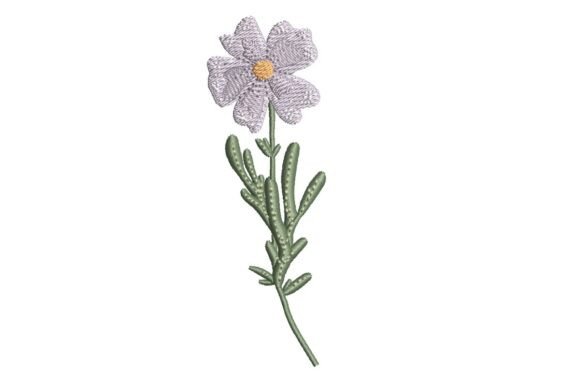
As an embroidery designer who’s stitched thousands of floral motifs—from bold peonies to minimalist ferns—I approached the Single Wildflower Embroidery with quiet curiosity. Not for its scale or complexity, but for its intention: softness, subtlety, and quiet confidence. The first thing that stands out is its mood. This isn’t a wildflower shouting for attention—it’s one gently turning toward light. The light lavender blossom carries a delicate balance of satin stitch petals and fine running stitch stems, with subtle texture in the center that suggests hand-drawn imperfection rather than digital rigidity. It reads as botanical, not botanical-themed—and that distinction matters when you’re building a cohesive handmade product line.
Fits Naturally Into Real-World Projects
I tested Single Wildflower Embroidery across several real client orders: a linen apron for a local herbalist, a cotton baby blanket for a newborn announcement, and a set of organic cotton kitchen towels for an Etsy shop rebranding around “slow living” aesthetics. In each case, it landed exactly where it needed to—neither too dominant nor too timid. On the apron, placed just above the pocket, it added artisanal warmth without competing with functional stitching. On the baby blanket, centered at the corner in pale ecru thread, it read as tender and intentional—not cutesy, not clinical. And on the towels? A single bloom near the hem gave instant visual rhythm, elevating what could’ve been generic linens into curated home goods.
How It Performs on Common Embroidery Surfaces
- Tote bags & sweatshirts: Works beautifully on medium-weight canvas and fleece-backed cotton. The stitch density feels moderate—not so dense it puckers knit fabric, not so sparse it loses definition on textured weaves. I used tear-away + light cutaway stabilizer on a midweight sweatshirt and got clean, flexible results.
- Caps & curved surfaces: Because it’s a compact, single-flower composition (not sprawling vines or layered clusters), it hooped cleanly in a 4x4 hoop—even on structured caps. No distortion in the petal curves, thanks to thoughtful digitizing that avoids long satin runs across curves.
- Baby items & delicate fabrics: Stitched flawlessly on bamboo-cotton blend receiving blankets using 40-weight rayon and ultra-light stabilizer. Small details—like the fine stem lines—held up without fraying or shadowing, even after gentle machine washing.
- Patches & applique designs: While Single Wildflower Embroidery is a standalone machine embroidery design (not an applique design), its clean outer edge and balanced fill-to-outline ratio make it ideal for turning into embroidered patches. I backed it with fusible web and heat-pressed it onto denim—no shifting, no bulk.
What It Adds Beyond Stitching
This isn’t just about how it sews—it’s about how it positions your work in the marketplace. When customers scroll past dozens of embroidered totes or nursery pillows, Single Wildflower Embroidery helps your item pause their thumb. Its restraint supports brand consistency for makers who value quiet luxury, mindful gifting, or earth-toned palettes. For Etsy sellers, it boosts perceived value without raising price points—shoppers recognize thoughtful detail, even if they can’t name why. In product photography, it provides natural focal contrast against neutral backdrops, and because it’s small-scale, it doesn’t overwhelm lifestyle shots. Most importantly, it invites personalization: pair it with a monogrammed initial or a tiny birthdate, and it becomes a meaningful personalized gift, not just decoration.
Practical Notes Before You Stitch
Before committing to Single Wildflower Embroidery on your next project, here’s what I recommend:
- Always run a test on scrap fabric matching your final substrate—especially for stretchy knits or dark fabrics where thread contrast changes perception.
- Check stitch density visually in your embroidery software. If you plan heavy use (e.g., commercial embroidery on high-turnover apparel), confirm it won’t feel stiff after repeated washes.
- Verify hoop size compatibility. Though compact, some versions may include optional larger layouts—review the file details on the Creative Fabrica product page before downloading.
- Use proper stabilizer: light cutaway for knits, tear-away for stable wovens, and water-soluble top film for delicate surfaces like silk-blend pillow covers.
- Inspect small details post-stitch—especially the center texture and stem tip—under good light. Fine running stitches can shift slightly on low-tension machines.
- Review licensing terms on the Creative Fabrica product page. As a digital embroidery file, its permitted uses for resale of finished products vary by vendor—and clarity here protects your small business.
Final Thoughts for Makers and Sellers
The Single Wildflower Embroidery earns its place in my go-to design assets not because it’s flashy, but because it’s reliable, evocative, and quietly versatile. It fits seamlessly into collections of Single Flowers, yet stands apart with its gentle tonal variation and organic flow. For apparel decorators, it adds refined detail without over-engineering. For craft fair vendors, it’s a fast-turnaround piece that still feels special. For digital product sellers, it’s a clean, scalable asset—ideal for printable mockups or layered design kits. And for anyone building a handmade brand rooted in authenticity, it’s a reminder that sometimes the most powerful statement is a single, well-placed bloom.
If you're curating embroidery files for real-world making—not just collecting—you’ll appreciate how Single Wildflower Embroidery bridges aesthetic intention and technical execution. It’s not just another machine embroidery design. It’s a quiet collaborator in your creative process.