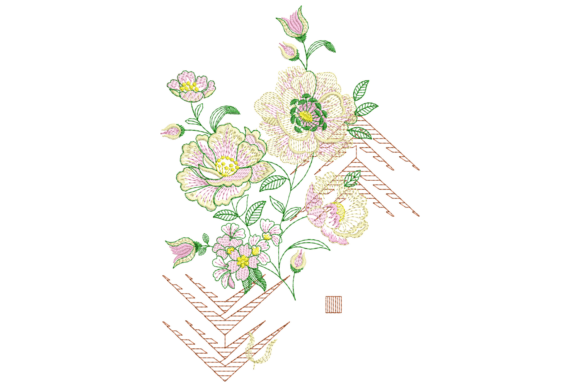
Floral Bouquet Digital Embroidery Design
A Thoughtful Review for Small Business Branding & Merch Use
As an embroidery designer who’s developed hundreds of commercial designs for cafés, boutiques, florists, bakeries, and handmade studios, I approached the Floral Bouquet Digital Embroidery Design with a very specific question: Does this design translate into authentic, scalable brand expression—not just pretty decoration? The answer is yes—but with thoughtful execution.
First Impression: Fresh, Elegant, and Intentionally Friendly
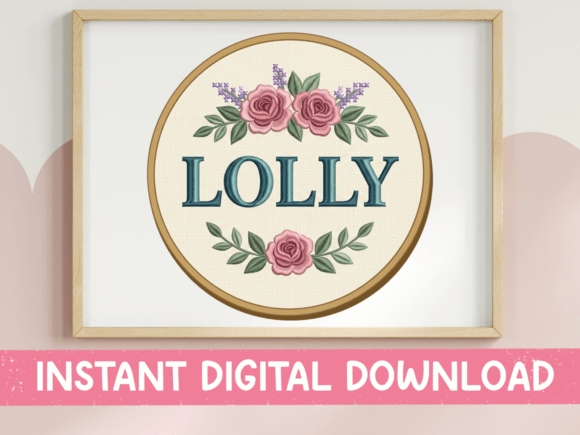
Right away, the description—“a delicate bouquet of flowers in soft pink and light green tones”—tells me this isn’t a bold, graphic statement. It’s intentionally gentle, harmonious, and uplifting. That makes it ideal for brands that value warmth, care, and quiet confidence: think a neighborhood florist wrapping bouquets by hand, a ceramicist stamping “hand-thrown” on mugs, or a pet wellness studio using botanical motifs to signal natural care. It reads as elegant, not fussy; cheerful, not childish; handmade, not mass-produced. For small business merch, that tonal alignment is half the battle won.
Real-World Performance Across Business Applications
The Floral Bouquet Digital Embroidery Design shines where authenticity and approachability matter most. On staff aprons for a specialty coffee roaster? It adds artisanal charm without overwhelming function. As a woven or embroidered patch sewn onto tote bags for a local bookstore? It becomes a tactile signature—soft, memorable, and distinctly human. As cap embroidery for a boutique skincare line? Its light green and soft pink thread colors pop against natural canvas or oatmeal twill, reinforcing clean, plant-based values.
For custom apparel like work shirts or sleeve accents, the design holds visual weight at 2.5"–3.5" widths—ideal for chest logos or left-sleeve placement. As a branded product add-on (think embroidered tags on linen napkins or fabric gift wrap), it elevates perceived value while staying true to a handmade aesthetic. And for Etsy sellers or craft businesses building cohesive design assets, this machine embroidery design integrates seamlessly alongside watercolor labels, serif typography, and minimalist packaging—no visual whiplash.
Where to Use It With Care
This design excels in medium-scale applications—but caution is needed in high-demand contexts. Avoid shrinking it below 1.75" for embroidered patches: delicate stems and petal outlines risk fill distortion or thread bridging on curved surfaces like cap fronts. On dark uniforms (navy, charcoal, black), confirm thread contrast—soft pink may mute without proper underlay or stabilizer support. Likewise, on textured fabrics like heavy canvas or terry cloth, test stitch density first: fine floral details can sink or blur if the design wasn’t digitized with loft-friendly underlay.
Also consider wash durability. Because it’s described as “delicate,” avoid placing it on high-friction zones (like pocket flaps or elbow seams) unless you’ve verified its stability through repeated laundering tests. For product packaging accents—say, on fabric-draped jars or reusable pouches—ensure the hoop size allows full registration without seam interference.
How It Strengthens Brand Identity & Customer Trust
In small business branding, consistency isn’t about repetition—it’s about resonance. The Floral Bouquet Digital Embroidery Design supports that by offering emotional continuity: whether stitched on a barista’s apron, printed on a thank-you card mockup, or used as a digital watermark on Instagram stories, it signals care, attention to detail, and intentionality. Customers don’t just see a flower—they register calm, craftsmanship, and sincerity.
That builds trust. When a bakery uses this design on delivery totes, it subtly reinforces freshness and local roots. When a pet brand applies it to bandanas, it communicates gentleness and natural care. Visually, it helps unify disparate touchpoints—uniforms, merch, packaging—without demanding rigid logo lockups. That flexibility is gold for growing small businesses still refining their visual language.
Practical Embroidery Designer Notes for Commercial Use
Before committing to production, here’s what I always do—and recommend you do—with the Floral Bouquet Digital Embroidery Design:
- Test in black and white first: Confirm legibility and balance without color bias—especially important for clients approving remotely.
- Check small-patch viability: Resize to your target patch dimensions (e.g., 2" oval or 1.5" circle) and inspect stem clarity and petal separation.
- Review thread color contrast: Soft pink and light green are lovely—but verify they read clearly on your base fabric. A quick swatch test saves rework.
- Inspect spacing and underlay: Delicate bouquets need generous spacing between elements to prevent thread buildup. Look for clean jump stitches and smooth transitions.
- Confirm hoop size compatibility: Ensure your embroidery machine’s standard hoop accommodates the full design without re-hooping mid-stitch.
- Test on real fabric + stabilizer: Run a sample on your actual garment or patch material—not just tear-away backing on cotton.
- Create a printable mockup: Present it professionally to clients using real-world context (e.g., embroidered on a denim tote or café apron).
- Compare beside other design assets: Does it harmonize with your current logo, typography, and packaging palette—or does it compete?
- Verify commercial licensing: Since this is intended for small business merch and branded patch use, confirm the digital embroidery file includes rights for unlimited physical products and resale.
Remember: a great machine embroidery design isn’t just technically sound—it serves your story. The Floral Bouquet Digital Embroidery Design does exactly that when matched with purposeful application, smart testing, and brand-aligned context. It’s not just another floral motif. It’s a quiet ambassador for your values—stitched, trusted, and ready to grow with your business.